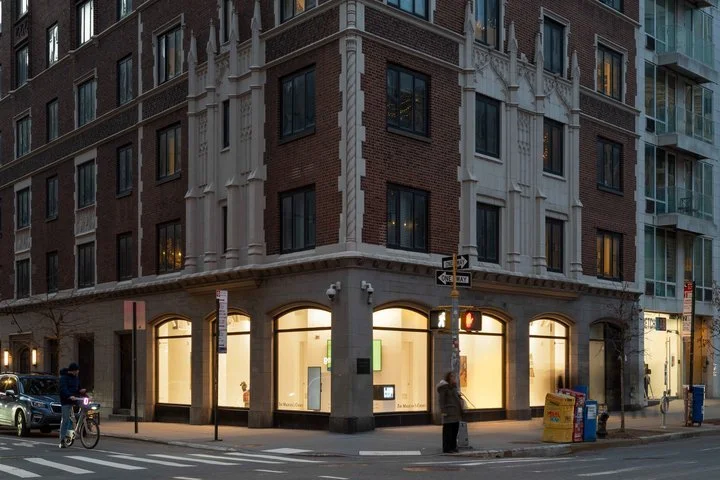
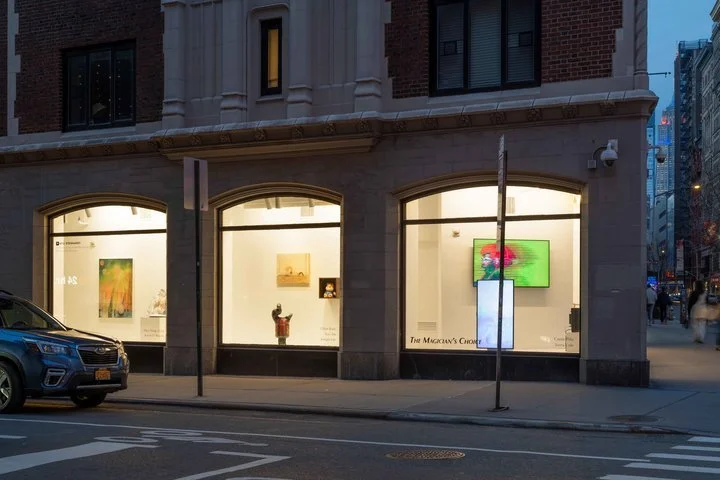
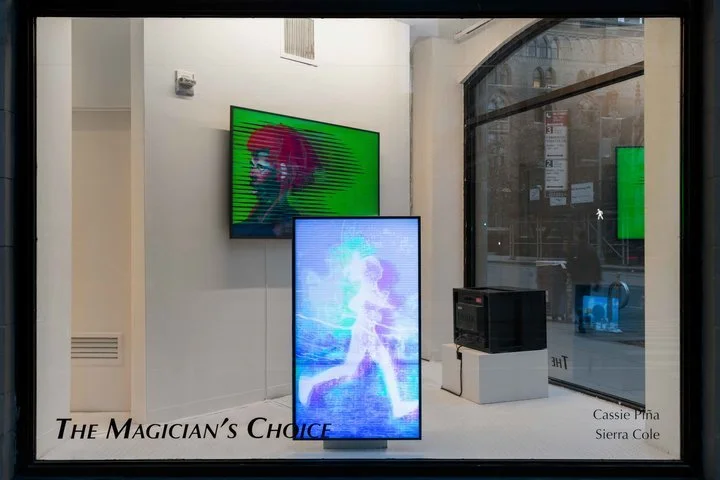
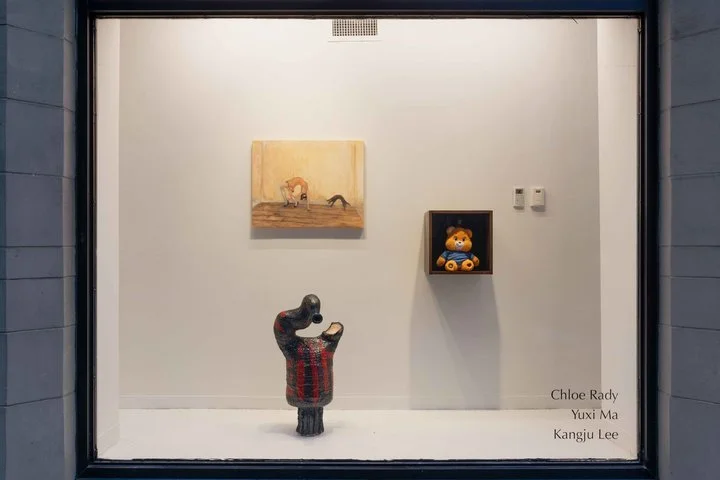
Exhibition Text
Art and magic share an uncanny ability to reveal reality through appearances. Both rely on staged encounters where perception, belief, and attention are subtly directed. Magic takes the tension between freedom and constraint as the basis of its craft. Among the classic techniques in stage magic is the Magician’s Choice, a form of equivocation in which a spectator appears to choose freely while the outcome remains predetermined through strategies known as “force” and “control”. The device takes familiar forms such as a card selection trick or a mentalist’s routine that leads participants to believe the choice is theirs. In contemporary life, the illusion of freedom operates in a similar way, masking the gap between individual agency and the invisible systems that shape our actions.
Earlier cosmologies understood magic as mysterious forces believed to animate the natural world through hidden correspondences between bodies, objects, and events. With the rise of Enlightenment rationalism, magic gradually shifted from a supernatural explanation to performance centered on the figure of the magician and the craft of conjuring. By the nineteenth century, illusionists demonstrated mastery not over invisible spirits but over everyday perception through techniques such as misdirection and equivocation that guide attention and belief of the audience.
The logic of the Magician’s Choice echoes throughout modern institutions and social life. Participatory democracy, consumer capitalism, and digital life each promise agency through choice while quietly structuring its conditions through their own mechanisms of control and force. The artists in this exhibition move within these dynamics. They draw on familiar apparatuses such as boxes, frames, formats, and invitations to engage the viewer. Opening toward uncertainty, the works move from containment toward transformation to reveal how the structures that organize choice might also produce outcomes that escape their logic.